

Atrás
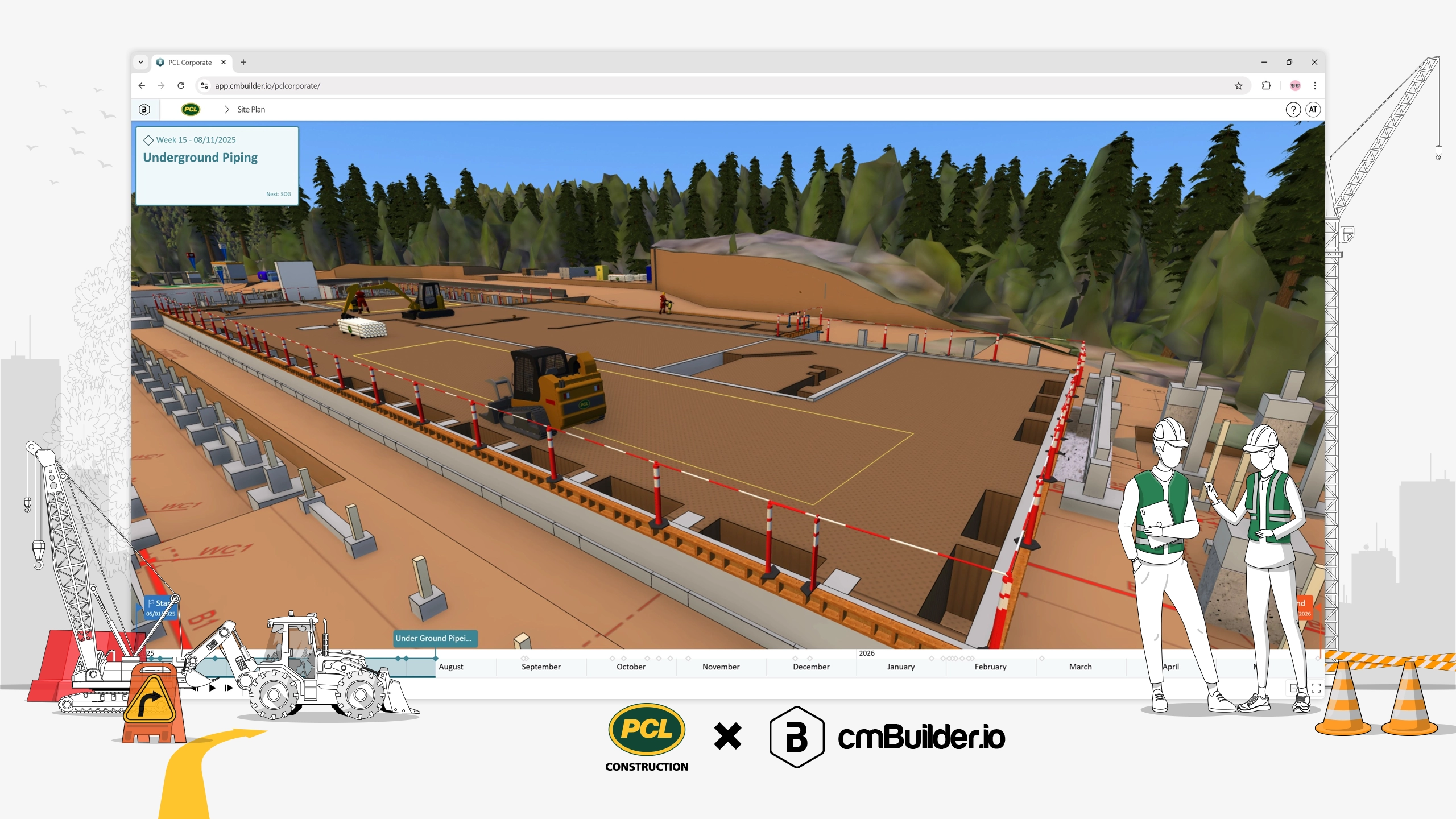
PCL Construction: transformación de la planificación de proyectos y búsqueda del éxito con cmBuilder
Dec 1, 2025
| 4 minutos de lectura

PCL Construction es una de las constructoras más grandes y respetadas de Norteamérica, y lleva a cabo complejos proyectos civiles, de edificios e infraestructuras en todo el continente. Liderada por innovadores como Aaron Akehurst (gerente de servicios de construcción) y Darren Kresak (superintendente), PCL ha implementado 100 licencias activas de cmBuilder, lo que ha permitido a los equipos (desde gerentes de VDC hasta superintendentes de campo) pasar de una planificación estática a una logística dinámica y 4D de las obras.

«Realmente creo que somos unos planificadores excelentes, probablemente los mejores. Y ahora podemos comunicar ese plan en la fase inicial... Realmente nos está ayudando a conseguir más trabajo».
- Aarón Akehurst - Gerente de Servicios de Construcción en PCL Construction

Aaron Akehurst establece una distinción fundamental que refleja la filosofía de planificación moderna de PCL. La digitalización simplemente convierte los procesos físicos en digitales, pasando del papel a los PDF. Sin embargo, la digitalización transforma radicalmente la forma en que se trabaja al aprovechar las herramientas digitales.
cmBuilder admite ese cambio. En lugar de interpretar dibujos estáticos en 2D, los equipos ahora combinan la geometría 3D, la secuenciación basada en el tiempo y las especificaciones precisas del equipo para crear simulaciones dinámicas en 4D. El resultado es una planificación más rápida de producir, más fácil de interpretar y mucho más alineada entre los clientes, los socios comerciales y los equipos de campo.
El impacto más inmediato se produjo en el trabajo de búsqueda, donde la comunicación visual de la metodología de construcción crea una poderosa diferenciación competitiva.
En un proyecto civil estadounidense reciente, los documentos de la licitación mostraban un sitio severamente restringido que apenas mantendría la instalación en funcionamiento. El equipo de PCL modeló una ubicación alternativa en cmBuilder, lo que demostró que el plan original no era factible y, al mismo tiempo, demostró una solución que ahorraría al cliente entre 5 y 10 millones de dólares. La secuencia visual hizo que la propuesta de valor fuera innegable.
En un gran proyecto hospitalario canadiense, cmBuilder permitió un cambio importante a mitad de diseño. Tras meses de trabajo de diseño basado en una excavación de cuatro pisos de profundidad, el equipo identificó una mejor ubicación para el edificio basándose en la pendiente del terreno. En el plazo de una semana, cuantificaron los volúmenes de excavación en cmBuilder y confirmaron que el cambio les ahorraría tres meses y entre 30 y 40 millones de dólares. La capacidad de modelar, validar y comunicar ese cambio con tanta rapidez permitió cambiar el diseño con confianza.
«Ahorramos entre 30 y 40 millones de dólares y tres meses de cronograma en un solo proyecto porque pudimos validar un cambio importante en menos de una semana. Realmente está cambiando la forma en que planificamos».
- Aarón Akehurst - Gerente de Servicios de Construcción en PCL Construction
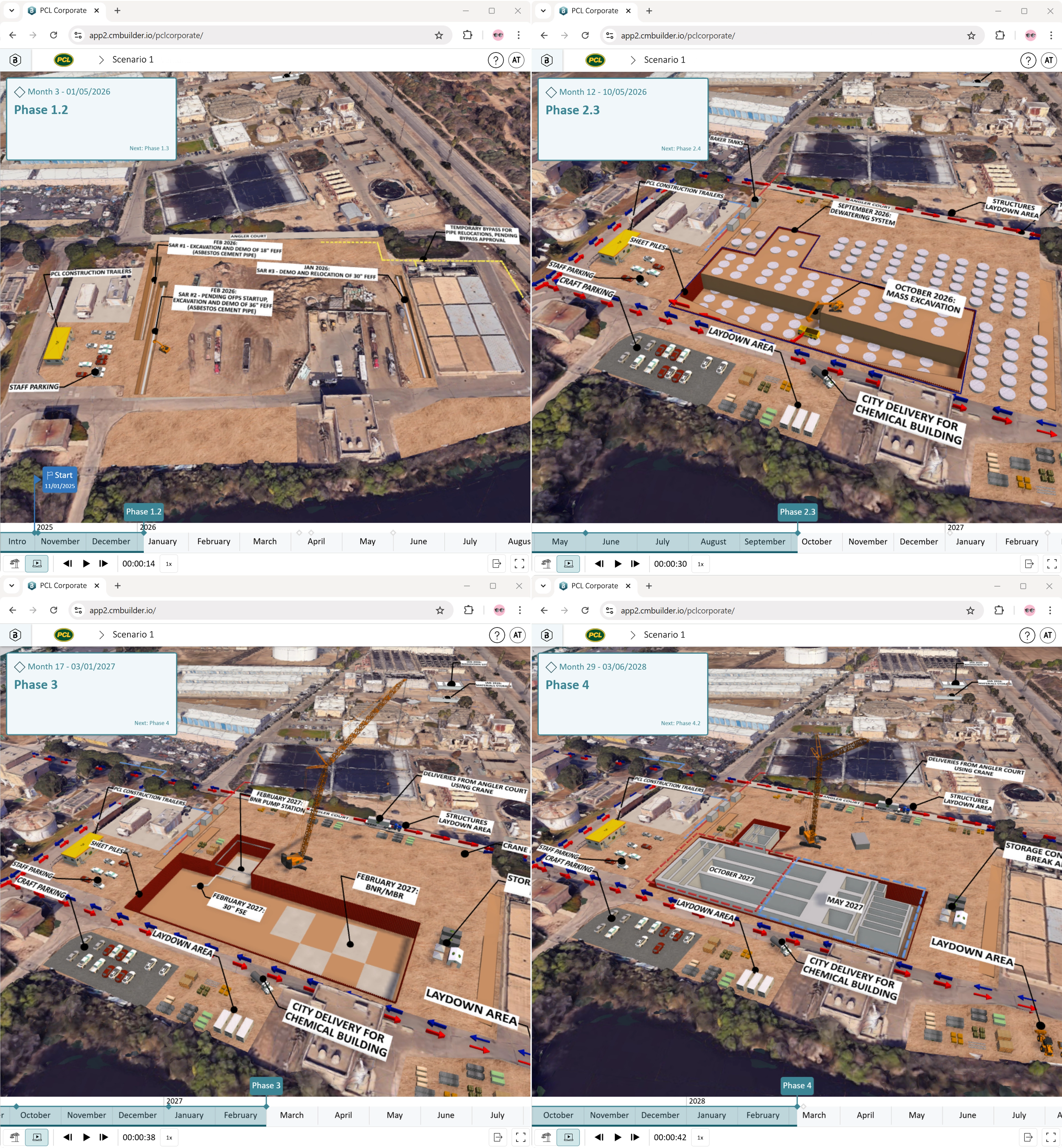
Más allá del trabajo ganador, cmBuilder ofrece valor durante toda la ejecución. En el proyecto hospitalario, el modelo dinámico del sitio genera cantidades precisas para los gastos generales que tradicionalmente se calculan con un nivel elevado, como los meses de remolque y los pies lineales de cerca por fase. En otro proyecto, se utilizó cmBuilder para planificar con antelación durante tres semanas, detectando un conflicto entre un vertido de hormigón y una zanja eléctrica antes de que se convirtiera en un problema de campo.
Quizás la más poderosa sea la biblioteca de cmBuilder con más de 3000 activos de construcción con especificaciones integradas. Un estudiante de una cooperativa que exploraba el catálogo de equipos descubrió una grúa tipo araña que cabría en un espacio reducido donde el superintendente había planeado instalar una carretilla elevadora. La precisión de las hojas cortadas y la geometría 3D permitieron la validación inmediata, eliminando lo que los superintendentes describen como «15 minutos buscando en cinco sitios web diferentes» las especificaciones básicas del equipo.
La adopción en el campo es la verdadera prueba para cualquier solución de tecnología de construcción. Darren Kresak, un superintendente con más de dos décadas de experiencia, representa el lado práctico de esta transformación digital.
Darren, que describe los fundamentos de su carrera como «dar con clavos», demuestra que la planificación 4D no está reservada a los especialistas en BIM. Su primer paso consistió en ver solo siete vídeos tutoriales en YouTube antes de empezar a crear simulaciones complejas.

«Mi experiencia en el modelado 3D era prácticamente nula antes de empezar... Estas simulaciones que he creado las hice completamente a partir de los siete primeros vídeos tutoriales de cmBuilder de YouTube».
- Darren Kresak, superintendente de PCL Construction
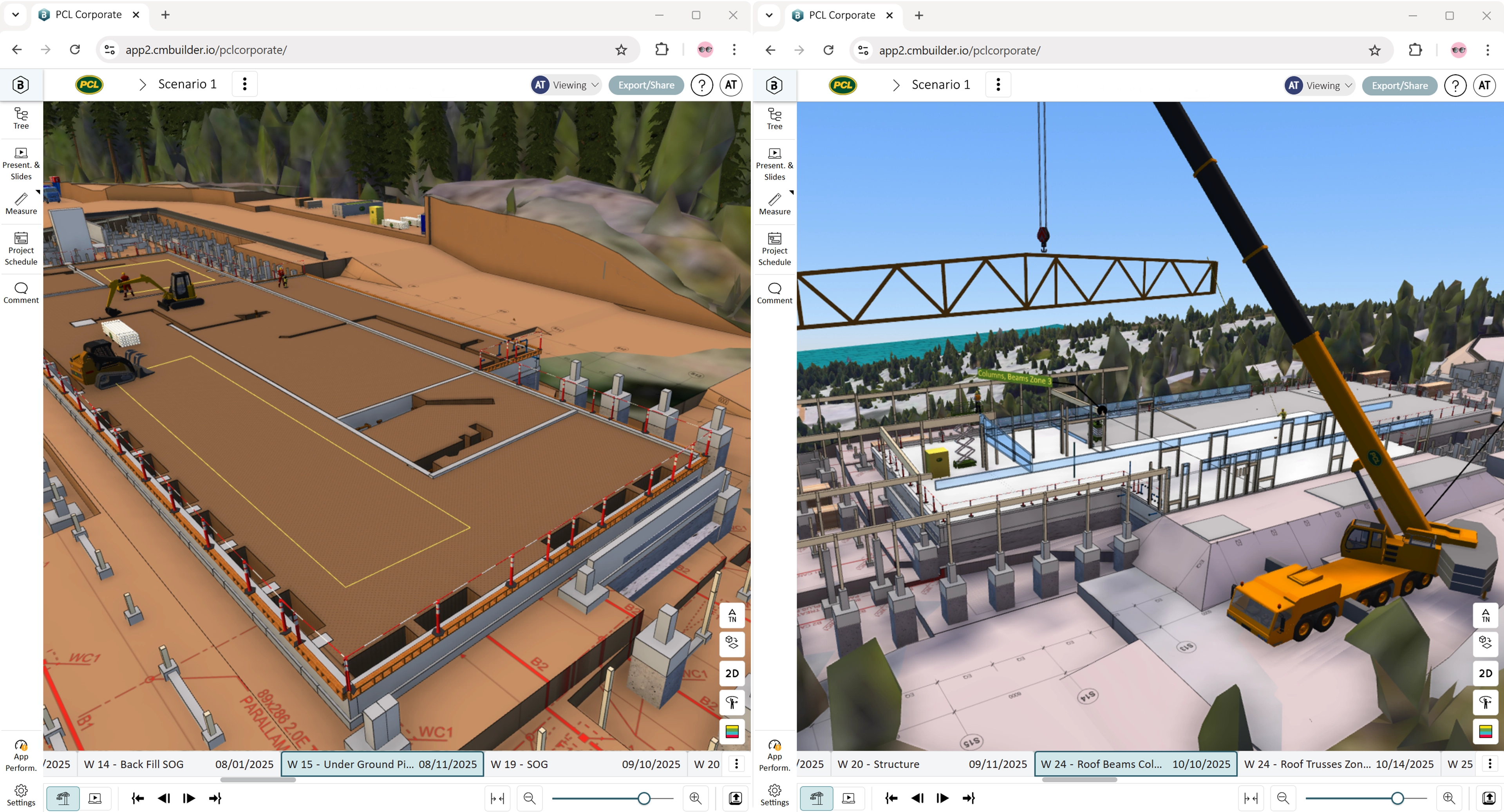
Esta facilidad de uso se tradujo en grandes triunfos. Para un parque de aventuras en góndolas de montaña, el desafío consistía en colocar cimientos de torres de hormigón en un desierto remoto, donde cada helicóptero volcado costaba aproximadamente 40 000 dólares. Al integrar los datos de los sondeos con drones en cmBuilder, Darren modeló los escenarios de acceso para mostrar a qué lugares se podía llegar por carretera, lo que podría eliminar hasta un 50% de los viajes en helicóptero.
Además, en una instalación de transporte de autobuses sin dibujos existentes, Darren utilizó importaciones de topografía de drones para validar las restricciones de diseño. Modeló las rampas de acceso para garantizar que los autobuses eléctricos no tocaran fondo, verificando los porcentajes de pendiente antes de que una sola pala tocara el suelo.
A los nueve meses de su adopción en toda la empresa, PCL ya tenía entre 75 y 80 proyectos activos que utilizaban cmBuilder. Su implementación está estructurada intencionalmente para integrar cmBuilder en todas las fases del proyecto:
• TIC/VDC: Configuración del proyecto, importación de terrenos y modelos e hitos iniciales.
• Ingenieros y coordinadores de proyectos: Secuenciación de excavaciones, superposiciones de dibujos e integración de cronogramas.
• Superintendentes: Impulse la logística, cree escenarios para experimentar con la colocación de grúas, el acceso al sitio y las rutas de seguridad.
Este flujo de trabajo en equipo garantiza que cmBuilder se convierta en un entorno de planificación vivo, no en una tarea de una sola persona.
Lo que antes eran dibujos estáticos y cronogramas largos ahora es un flujo de trabajo dinámico e impulsado por el equipo que establece un nuevo estándar para la planificación digital de la construcción. Este cambio va más allá de la simple digitalización y pasa a convertirse en una verdadera transformación, lo que hace que la experiencia de PCL sea visible, valiosa y decisiva a la hora de conseguir trabajos y mejorar la ejecución en cada etapa del proyecto.
Si desea obtener más información sobre el enfoque de PCL para implementar nuevas soluciones tecnológicas, vea la presentación de Aaron en SitePlan Summit 3: